


Introduction
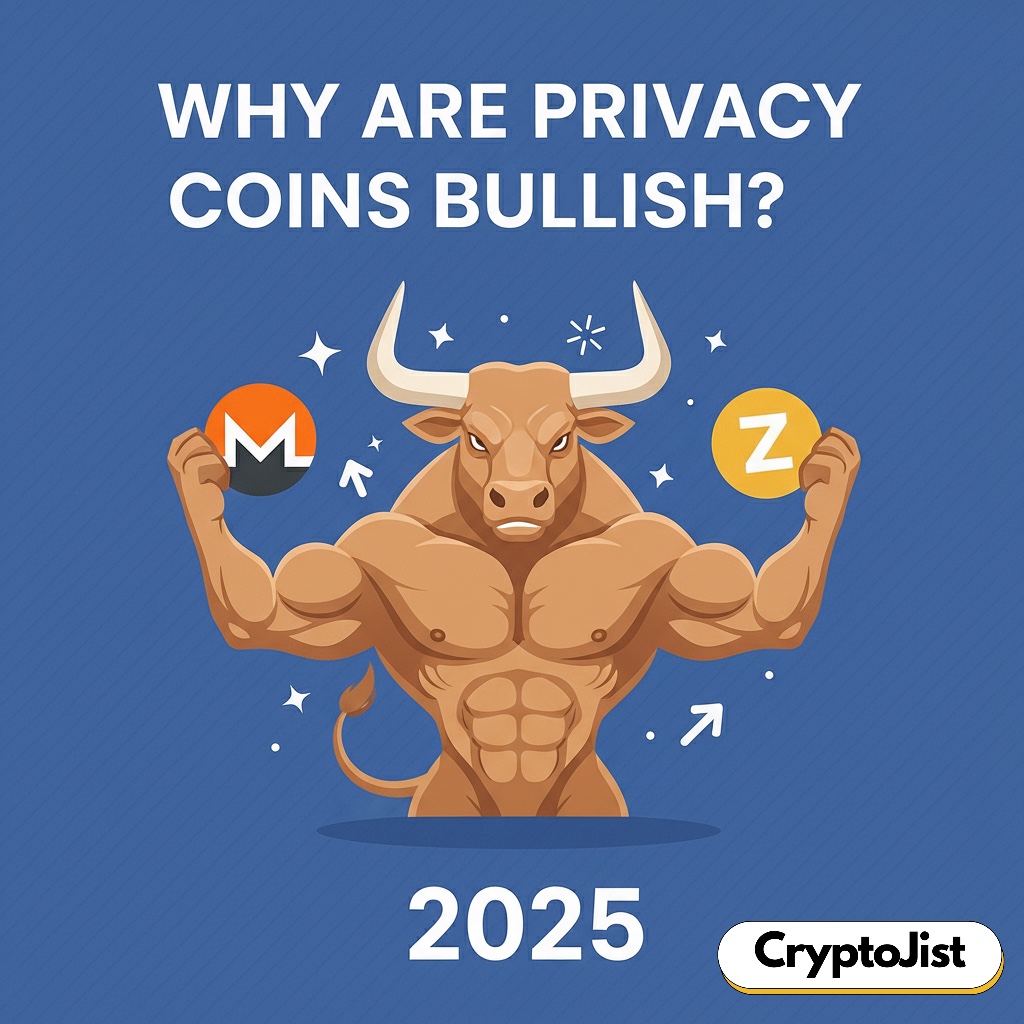
In a world where most cryptocurrencies are transparent — every transaction, address, and balance visible to all — Monero (XMR) stands out as a privacy-first alternative. It aims to offer fungible, untraceable currency that behaves more like digital cash than a public ledger. In this article, we’ll explore what Monero is, how it achieves privacy, its advantages and risks, the broader category of privacy coins, and how to thoughtfully allocate it in your crypto portfolio.
What Is Monero (XMR)?
- Monero is an open-source, decentralized cryptocurrency built around privacy, security, and fungibility.
- Unlike coins such as Bitcoin whose blockchain is transparent, Monero obscures sender, recipient, and amount on every transaction by default.
- It uses a combination of advanced cryptographic techniques like stealth addresses, ring signatures, RingCT (Ring Confidential Transactions), and Bulletproofs to hide transaction details.
- Because every transaction is private by default, Monero is often described as one of the few fungible cryptocurrencies — i.e. one XMR is always equivalent to another, with no “tainted” history.
- Monero was launched in 2014, forked from the CryptoNote protocol (as an offshoot from Bytecoin) and has evolved over time.
- Unlike many tokens with fixed supply ceilings, Monero has an infinite (or continuous issuance) model, though the issuance rate decreases over time.
How Monero Achieves Privacy
To understand Monero’s value proposition, it helps to dig into how its privacy mechanisms work (at a high level).
- Stealth Addresses
When someone sends XMR, they don’t send it to your “public address” in a static way. Instead, they generate a one-time stealth address so that the recipient cannot be linked on the public chain. - Ring Signatures
To hide the sender, Monero mixes the real input with decoy inputs from other users (a “ring” of possible spenders). Because of this, observers can’t definitively tell which one is the real one. - RingCT / Confidential Transactions
Even the amount being transferred is hidden. Monero uses RingCT to conceal the amount in each transaction. - Bulletproofs
These are cryptographic tools that allow Monero to prove a transaction is valid (no coins are created from nothing) while keeping amounts private, with relatively compact proofs.
These layers of obfuscation make it hard — though not necessarily impossible under all conditions — for outside observers to trace transactions.
Recent academic work also highlights that Monero has addressed many earlier traceability heuristics over time, though vigilance is still required.
The Broader Category: Privacy Coins
Before diving into why you might include XMR in your portfolio, it helps to see where it sits in the broader world of privacy-enhanced cryptocurrencies.
What Are Privacy Coins?
Privacy coins (also called anonymity-enhanced cryptocurrencies) are digital currencies designed to protect user anonymity and make transactions less traceable. They contrast with “transparent” blockchains like Bitcoin or Ethereum, where every transaction is public.
Prominent Examples
- Monero (XMR) — privacy by default (as described above).
- Zcash (ZEC) — gives users “shielded” (private) or “transparent” transaction options using zk-SNARKs.
- Dash (DASH) — includes a mixing feature (PrivateSend) to obfuscate transactions.
- Others (smaller or less commonly adopted) — e.g. Firo, Verge, Secret, and others.
Each privacy coin uses different techniques (zk proofs, mixing, ring signatures, etc.) and offers different trade-offs (performance, flexibility, optional privacy vs default privacy, regulatory exposure).
Why Monero (XMR) Deserves a Spot in Your Portfolio
Here are several reasons why some investors consider adding Monero to their crypto allocations (not financial advice — always do your own research):
- Strong Privacy & Fungibility
If you value anonymity and fungibility, Monero offers features that are hard to replicate. Other privacy coins might make privacy optional; Monero makes it default. - Resilience to Censorship / Surveillance
Because Monero transactions can’t be easily traced, they’re harder for governments or intermediaries to block or sanction. This gives it an edge in oppressive or heavily regulated environments.
Some see Monero as a contrarian bet — a privacy hedge against increasing regulatory scrutiny in crypto. - Technical Innovation & Community Support
The Monero community is active and research-oriented. It has continuously updated its protocols to deal with emerging threats or deanonymization heuristics. - Potential as a Safe Haven for Privacy
In scenarios where public blockchains become heavily monitored or regulated, privacy assets like Monero might retain value as a refuge. - Diversification
Having exposure to different paradigms in crypto — not just “store of value” or “smart contract platforms,” but also privacy infrastructure — can add asymmetry or optionality to a portfolio.
Risks & Challenges
- Regulatory Backlash
Privacy coins often attract regulatory scrutiny. Some exchanges have delisted Monero or blocked its trading in certain jurisdictions due to AML/KYC constraints. - Traceability Heuristics and Flaws
Earlier versions of Monero had vulnerabilities where mixins or timing could leak which coin was real. Researchers have documented such issues, and the protocol has evolved to mitigate many of them, but no privacy system is perfect. - Liquidity / Exchange Access
Because of regulatory pressure, liquidity and exchange support for Monero can be more limited than for mainstream cryptos. Getting in or out of positions might be harder depending on your jurisdiction. - Public Perception and Stigma
Because privacy coins are sometimes associated (fairly or unfairly) with illegality or darknet markets, investors may face reputational or legal scrutiny depending on jurisdiction. - Technical / Network Risks
As with any crypto, bugs, protocol attacks, or network issues (e.g. “anomalous peers” in the P2P network) are possible. Recent research has flagged nonstandard peers in Monero’s network that may try to monitor or interfere.
Suggested Allocation & Tips
- Given the higher risk profile and regulatory sensitivity, most investors allocate a small portion (e.g., 1–5%) of their crypto holdings to privacy assets like Monero.
- Use regulated and trustworthy platforms to buy/sell XMR. Prefer decentralized or peer-to-peer methods if your regulatory environment allows it.
- Hold XMR in noncustodial wallets that support privacy features (e.g. official Monero wallets).
- Stay updated on protocol upgrades — Monero often introduces improvements to maintain privacy and defend against novel attacks.
- Consider your jurisdiction’s legal stance on privacy coins — in some places they may be restricted or delisted.
 Bitcoin
  Tether
  BNB
BNB 