


Global oil pumping again, and the sudden spike is sending shockwaves across financial markets including crypto. The move comes amid rising geopolitical tensions in the Middle East, with reports suggesting that the UAE temporarily halted some oil pumping operations after Iranian drone threats and regional war escalation fears.
Energy markets reacted immediately, pushing oil prices higher as traders priced in the risk of supply disruptions from one of the world’s most critical oil-producing regions.
But what does this mean for Bitcoin and the broader crypto market?
Let’s break it down.
Why Is Oil Pumping Right Now?
The main driver behind the oil rally is geopolitical risk.
Recent reports circulating across energy markets suggest that parts of UAE oil pumping infrastructure were temporarily shut down as a precaution following drone threats linked to Iranian-backed groups.
Even if the shutdown is temporary, markets react quickly to potential disruptions.
The Middle East produces roughly one-third of the world’s oil supply, and any instability in the region can trigger rapid price spikes.
There are three major factors pushing oil higher.
1. Supply Disruption Fears
If oil infrastructure in the Gulf region faces attacks or shutdowns, global supply chains could tighten rapidly.
Even short-term disruptions can move prices significantly because oil markets operate on tight supply-demand balances.
2. War Escalation Risk
Investors are increasingly concerned about a broader Middle East conflict involving Iran and regional allies.
If tensions escalate further, shipping lanes such as the Strait of Hormuz could become vulnerable, which would impact a huge portion of global oil exports.
3. Inflation Expectations
Higher oil prices often lead to higher inflation expectations, which can force central banks to maintain tighter monetary policies.
This creates ripple effects across global financial markets.

Impact of Rising Oil Prices on Bitcoin
Oil and Bitcoin might seem unrelated, but in reality they are both tied to global liquidity and macroeconomic sentiment.
When oil prices spike rapidly, markets often enter a risk-off environment.
This can negatively impact crypto in the short term.
Here are the key transmission mechanisms.
1. Risk-Off Sentiment
When geopolitical tensions rise, investors often move money into traditional safe-haven assets like:
- Gold
- US Treasuries
- Cash
Risk assets such as Bitcoin and tech stocks tend to experience selling pressure.
2. Liquidity Tightening
If rising oil prices push inflation higher, central banks may delay rate cuts.
Less liquidity in the system can lead to lower speculative flows into crypto markets.
3. Correlation With Global Markets
Bitcoin increasingly behaves like a macro asset rather than an isolated crypto instrument.
When global markets react to geopolitical shocks, crypto markets often follow.
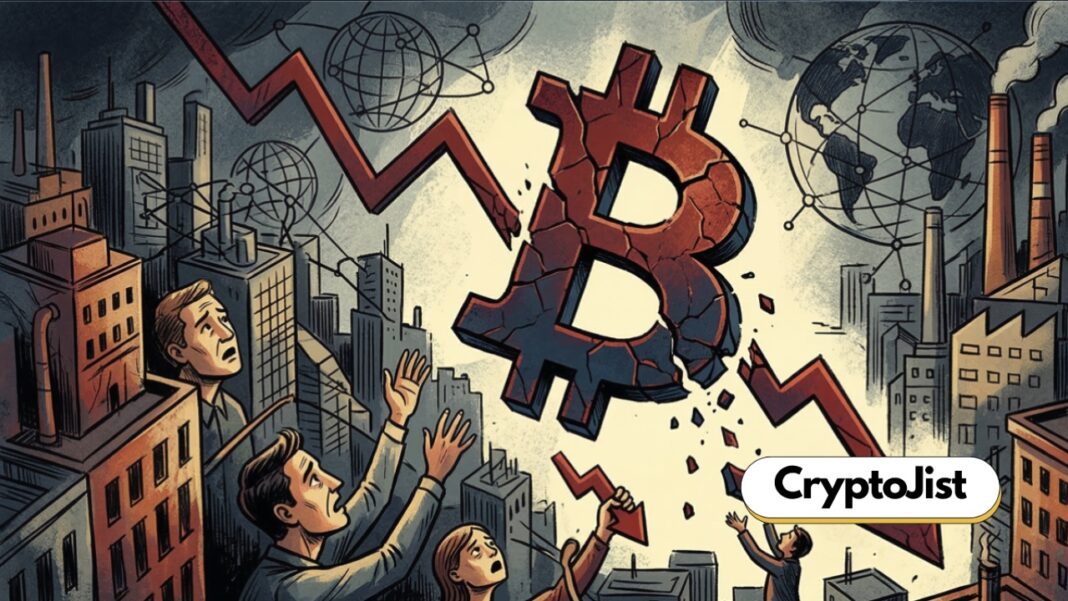
Could Bitcoin Fall Because of the Oil Spike?
Yes, at least in the short term.
If geopolitical tensions continue to escalate, Bitcoin could experience temporary downside volatility as traders reduce risk exposure.
Historically, markets often experience sudden selloffs during geopolitical events before stabilizing.
However, there is an important distinction between short-term panic and long-term trend.
Technical Indicators Still Remain Bullish
Despite the macro panic, Bitcoin’s technical structure remains relatively strong.
Several indicators still point toward a bullish broader trend.
Strong Support Levels
Bitcoin continues to hold above major higher-timeframe support zones.
As long as price remains above these levels, the macro structure remains intact.
Higher Highs and Higher Lows
The overall trend structure still shows a bullish market pattern, meaning corrections may simply be part of a healthy pullback.
Liquidity Reset
Sharp corrections often flush out over-leveraged traders.
Once liquidations clear excessive leverage, markets tend to stabilize and resume their trend.
The Market Psychology During Panic
Markets often behave irrationally during geopolitical shocks.
There is a famous trading quote that becomes especially relevant during times like this:
“Bottoms are made in panic, while tops are made in euphoria.”
When fear spikes and markets turn extremely negative, it often signals capitulation phases where strong hands begin accumulating.
But this does not mean traders should blindly buy every dip.
Catching Falling Knives Is Dangerous
One of the most common mistakes during sudden selloffs is trying to catch the bottom too early.
Fast-moving markets can continue falling much longer than expected.
Professional traders typically wait for:
- Confirmation of support
- Volume stabilization
- Reversal signals
Entering blindly during panic often leads to unnecessary losses.
Could This Trigger a Larger Market Reset?
Some analysts believe that if geopolitical tensions escalate further, global markets could experience a broader correction phase before the next rally.
In extreme scenarios, markets sometimes see 10–20% corrections before resetting into the next bullish phase.
If that happens, Bitcoin could temporarily follow the broader risk-off trend.
However, once macro uncertainty fades and liquidity returns, crypto markets historically recover quickly.
FAQs
Why is oil pumping today?
Oil prices are rising due to geopolitical tensions in the Middle East and reports of UAE oil pumping disruptions following drone threats linked to Iranian groups.
Does oil pumping affect Bitcoin?
Higher oil prices can increase inflation fears and trigger risk-off sentiment, which may cause short-term selling pressure in crypto markets.
Can Bitcoin crash due to oil pumping?
Bitcoin can experience temporary drops during global crises, but historically these events rarely change the long-term trend.
Are Bitcoin technical indicators bearish?
Not currently. Most higher-timeframe indicators still show a bullish structure despite short-term volatility.
Should traders buy the dip now?
Traders should be cautious. Catching falling knives is risky, and waiting for confirmation is generally safer.
Final Thoughts
The current surge in oil prices highlights how geopolitics can quickly influence global financial markets.
If Middle East tensions escalate further, short-term volatility could increase across all risk assets including Bitcoin.
However, the broader crypto market structure still appears technically bullish, meaning this volatility may simply be a reset before the next move.
For now, traders should stay cautious, monitor macro developments closely, and avoid emotional trading decisions.
Read also:
Bitcoin is Bottom But Is The Bottom In?
Vitalik Buterin Pushes One-Click Ethereum Staking for Institutions
Gondi Protocol Exploit Drains $230K in NFTs
Get the news in a Jist. Follow Cryptojist on X and Telegram for real-time updates!

 Bitcoin
  Ethereum
  Tether