


Crypto is one of the few financial markets where you can see almost everything happening in real time. Every transaction, every wallet movement, every large transfer is recorded on the blockchain. This transparency is what makes on-chain analysis so powerful.
If you learn how to read this data properly, you can stop guessing and start following what the biggest and smartest players in the market are actually doing.
This guide will break it down in a simple, practical way so you can use it in real trading and investing.
What Is On-Chain Analysis?
On-chain analysis is the process of studying blockchain data to understand:
- Where money is moving
- Who is accumulating or selling
- Market sentiment and behavior
- Potential trend reversals
Unlike traditional markets where a lot of data is hidden, crypto gives you access to:
- Wallet balances
- Transaction history
- Exchange flows
- Token distribution
Think of it like this:
Price tells you what happened
On-chain data tells you why it happened
Why Tracking Smart Money Matters
Smart money refers to:
- Whales (large holders)
- Institutions
- Early adopters
- Funds and market makers
These players move markets.
Retail investors usually react late. Smart money positions early.
If you can track:
- When whales accumulate
- When they distribute
- When funds move coins to exchanges
You get an edge that most traders don’t have.
You can use the Arkham Intelligence portal
It is a go to portal for finding and tracking whale activities consistently be it a novice or a professional. Arkham Intelligence helps you identify whale wallets, monitor transactions and follow real-time activity. By using such platforms, you can spot accumulation and distribution before it shows in price. It is a beginner friendly portal and even the pros use it for trading using crucial data provided by the platform. Not just that, you can trade on their exchange and it is one of the top exchange and they are shifting from a Centralized exchange to a completely Decentralized Exchange.

Key On-Chain Metrics You Must Understand
Let’s go through the most important metrics that actually work in real-world scenarios.
1. Exchange Inflows and Outflows
This is one of the most powerful indicators.
What it means:
- Inflows = coins moving into exchanges
- Outflows = coins leaving exchanges
How to interpret:
- High inflows → potential selling pressure
- High outflows → accumulation and holding
Example:
If BTC starts moving in large amounts to exchanges, it often signals that whales are preparing to sell.
If coins are being withdrawn, it usually means long-term holding.
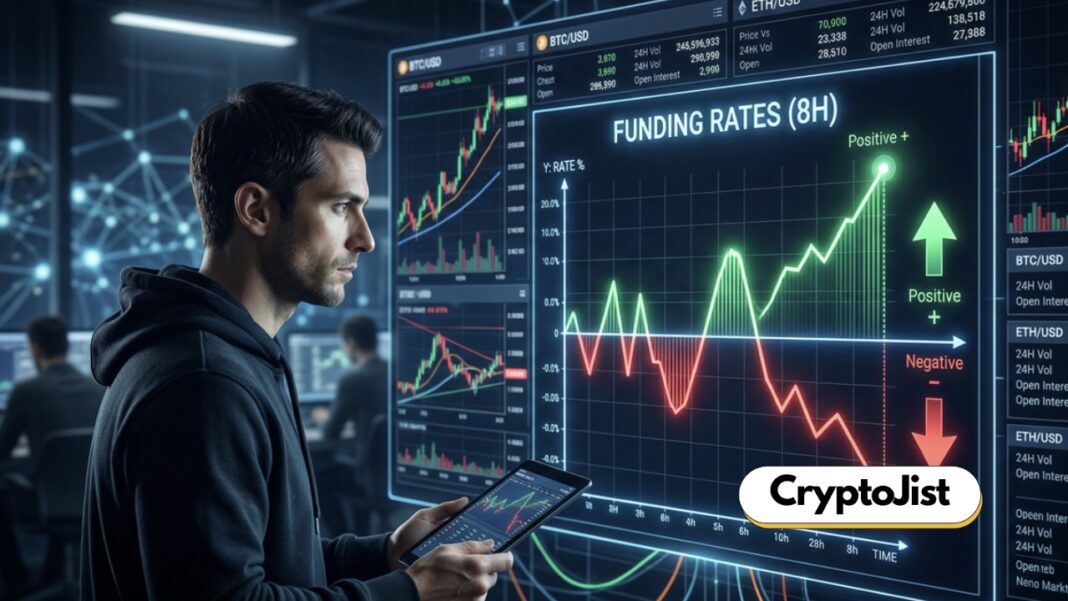
Read also: Funding Rates Explained: The Hidden Signal Every Trader Must Watch
2. Whale Activity
Whales are wallets holding large amounts of crypto.
Tracking them helps you understand:
- Accumulation zones
- Distribution phases
- Market turning points
What to watch:
- Sudden large transfers
- New whale wallets forming
- Old wallets becoming active
Reality check:
Whales do not chase pumps. They accumulate during fear.
3. Wallet Distribution
This shows how supply is spread across wallets.
Why it matters:
- If few wallets hold most supply → risk of manipulation
- If distribution increases → healthier market
Bullish signal:
- Increasing number of mid-sized holders
Bearish signal:
- Large wallets increasing dominance
4. Dormant Coins Movement
Coins that haven’t moved for a long time suddenly becoming active is a big deal.
What it indicates:
- Early investors may be selling
- Market cycle may be changing
If old coins start moving during a rally, it can signal a top.
5. Stablecoin Flows
Stablecoins are the fuel of the crypto market.
Key idea:
- More stablecoins entering exchanges → buying power
- Stablecoins leaving → less liquidity
Bullish scenario:
USDT, USDC inflows increase while BTC stays stable
This often leads to a breakout.
6. Network Activity
This includes:
- Active addresses
- Transaction count
- Network usage
Why it matters:
- Rising activity → growing demand
- Falling activity → weakening interest
This is especially important for altcoins.
7. Realized Profit and Loss
This tells you whether people are:
- Taking profits
- Selling at a loss
Market psychology:
- High profit-taking → possible top
- High losses → panic selling and potential bottom
How Smart Money Actually Operates
To track smart money, you need to understand how they behave.
Phase 1: Accumulation
- Happens during fear and boredom
- Prices move sideways
- Retail loses interest
On-chain signals:
- Exchange outflows
- Whale accumulation
- Low volatility
Phase 2: Expansion
- Price starts trending upward
- Retail begins entering
On-chain signals:
- Rising network activity
- Moderate exchange inflows
- Increasing wallet growth
Phase 3: Distribution
- Price is high
- Everyone is bullish
On-chain signals:
- High exchange inflows
- Old coins moving
- Whale selling
Phase 4: Capitulation
- Panic selling
- Market crashes
On-chain signals:
- Massive losses realized
- Retail exits
- Smart money starts buying again
Tools You Can Use for On-Chain Analysis
You do not need complex setups. Start with these types of tools:
- Blockchain explorers
- On-chain analytics platforms
- Whale tracking dashboards
- Exchange flow trackers
Focus on consistency rather than using too many tools.
How to Actually Track Smart Money Step by Step
Here is a practical framework you can follow.
Step 1: Check Exchange Flows Daily
Look for unusual spikes in:
- BTC inflows
- ETH inflows
- Stablecoin deposits
This gives you early signals.
Step 2: Track Whale Wallets
Follow known large wallets.
Watch for:
- Accumulation patterns
- Sudden transfers
- Repeated behavior
Step 3: Combine With Price Action
On-chain data alone is not enough.
Use it with:
- Support and resistance
- Market structure
- Volume
Step 4: Identify Market Phase
Ask:
- Are we in accumulation or distribution?
This changes everything about your strategy.
Step 5: Wait for Confirmation
Do not act on a single signal.
Look for confluence:
- Whale buying + outflows + support level
That is where high probability setups exist.
Common Mistakes Beginners Make
1. Overreacting to Single Transactions
One big transfer does not mean anything.
Look for patterns, not events.
2. Ignoring Context
A large inflow during a bull market is not always bearish.
Context matters.
3. Following Noise
Many social media accounts exaggerate whale movements.
Always verify data.
4. Not Combining With Technical Analysis
On-chain analysis is not a replacement.
It is a complement.
Real Example of Smart Money Behavior
Let’s simplify a typical cycle:
- BTC crashes
- Retail panic sells
- Whales accumulate quietly
- Exchange balances drop
- Price stabilizes
- Suddenly price rallies
Most people enter here.
But smart money was already positioned weeks earlier.
How You Can Use This in Your Strategy
For Investors
- Accumulate when whales accumulate
- Avoid buying during heavy inflows
For Traders
- Use on-chain as confirmation
- Trade breakouts with liquidity support
For Long-Term Holders
- Track macro trends
- Ignore short-term noise
Final Thoughts
On-chain analysis is not magic.
It does not predict the future with certainty.
But it gives you something most markets do not offer:
Transparency
If you learn to read the data properly, you stop reacting emotionally and start acting strategically.
The goal is simple:
Do not follow hype
Follow money
Because in crypto, money leaves footprints. You just need to know where to look.
FAQs
1. Is on-chain analysis better than technical analysis?
No, it works best when combined with technical analysis.
2. Can beginners use on-chain data?
Yes, start with simple metrics like exchange flows and whale activity.
3. How accurate is on-chain analysis?
It is not 100 percent accurate but gives strong probabilistic signals.
4. What is the most important metric to track?
Exchange inflows and outflows are among the most reliable indicators.
5. Do whales manipulate the market?
Sometimes yes, but their behavior still leaves patterns you can track.
6. Is on-chain analysis useful for altcoins?
Yes, but liquidity is lower so signals can be less reliable.
7. How often should I check on-chain data?
Daily for active traders, weekly for investors.
8. Can on-chain data predict crashes?
It can give early warning signs but not exact timing.
9. Are free tools enough?
Yes, many free tools provide sufficient data to get started.
10. What is the biggest advantage of on-chain analysis?
Transparency. You can see what big players are doing in real time.
Get the news in a Jist. Follow Cryptojist on X and Telegram for real-time updates!

 Bitcoin
  Tether
  BNB
BNB 